| |
First Page | Contact Us |
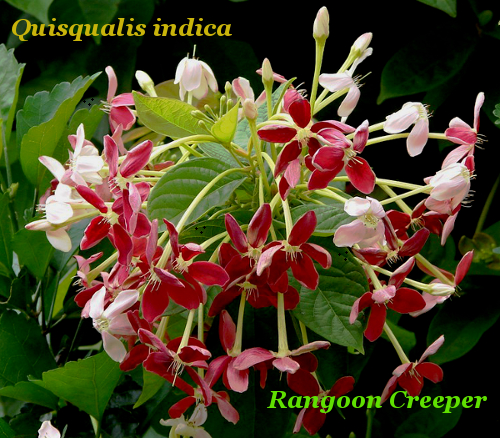
From southern Asia the Rangoon creeper
is a tender fast growing vining plant. The leaves are simple. An
evergreen, its flowers are mostly present in summer and fall. The
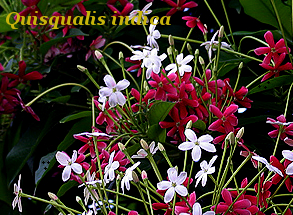
fragrant flowers
open white, gradually turning pink then red as they age. The
flower's fragrance is delightful. Some call it fruity, while
others liken it to toasted coconut.
 |
 |
 |
The growth rate is generally fast, and
the plant does not make heavy fertilizer demands. Quisqualis
does like medium to bright light. Under
good conditions it will be necessary to prune the plant to
keep it in bounds. Under too right conditions the plant might
become invasive. (I have never seen one as an escapee in Florida
but have seen cases where a planting in a yard took over when
neglected.) The unique fragrant color-changing white to red
flowers and tropical nature make the plant ideal near a water
feature. So make sure if you are planting the Quisqualis
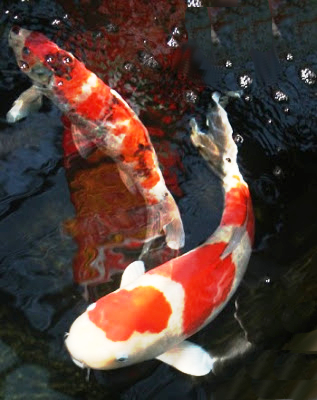
in your landscape, possibly as part of your Koi pond construction,
that you keep up with the trimming so it doesn't completely take
over your pond and garden.
The thorns on a Quisqualis are
formed when a leaf drops but the petiole remains. In a little time
this petiole stiffens, grows stronger, and becomes a very
effective climbing hook. While not sharp, like a cactus thorn,
these can make pruning a bit tedious, and can draw blood on
impatient gardeners.
Under control, on a trellis or pergola or allowed to form a big
mound Quisqualis can be a beautiful addition to a
planting. But remember, more than a little frost will prune it
down for you. The beauty, and mysteries, surrounding this plant
have made it a necessity for my collection.
| Contact Webmaster | Second Page | First Page |