|
Cultural requirements: Hot, wet tropical lowlands with mildly acid soil high in organic matter. Not tolerant of frost, drought. Description: Tree to 15 m. Propagation by seed, layering, grafting. Fruit production in 15 years from seed, 4-5 years from vegetative propagation. Fruit spherical or ellipsoid, in clusters of about 20 (duku 8-10); external color yellow, internal whitish. Utilization: Aril eaten fresh, preserved, in jellies. Flavor subacid to sweet; universal appeal. High potential for wider cultivation of superior selec-tions in hot Tropics. References: Burkill 1935, Molesworth Allen 1967. Sandoricum koetjape Merr. (= Sandoricum indicum Gov.) Common names: santol (English); sentul, kechapi (Southeast Asia). Origin: Southeast Asia. Distribution: Widely introduced into Tropics but com-mon only in Asia. Cultural requirements: Hot, wet tropical lowlands with fertile medium-acid soil. Large trees will tolerate light frost. Description: Large tree. Propagation by seed, layering, grafting. Flowers in April-May (Florida). Fruit matures in about 120 days. Fruit spherical, 4-8 cm in diameter; external color yellow orange, internal white. Utilization: Pulp eaten fresh, preserved, in jellies. Flavor sour to sweet; good selections have universal appeal. Good potential for wider cultivation of superior selections. References: Burkill 1935, Leon 1968. MoraceaeArtocarpus altilis Fosb. (= A. communis J. R. Forst.)Common names: breadfruit (English); fruta de pan (Spanish); arbre de pain (French); fruta pao (Portuguese). Seedy form called breadnut. Origin: Southeast Asia, Polynesia. Distribution: Pantropic. Cultural requirements: Hot, wet tropical lowlands. Tolerant of a variety of soils if well drained. Injured by temperatures below 5° C. Description: Tree to 30 m. Propagation by cuttings, layering (seedy form by seed). Generally two crops of fruit mature during year, varying in time and duration. Monoecious. Fruit spherical, 20-30 cm in diameter; external color greenish yellow, inte-rior whitish or pale yellow. |
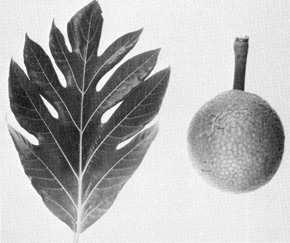
Figure 23. Breadfruit, a starchy fruit usually eaten cooked. Utilization: Entire fruit baked, boiled, roasted, fried; preserved by fermentation. Seeds of seedy selections boiled. Flavor starchy, general appeal. Important food in hot Tropics. Good potential for wider cultivation. References: Burkill 1935, Molesworth Allen 1967, Ochse et al. 1961. Artocarpus Integer (Thunb.) Merr. (= A. champeden Spreng.) Common names: chempedak (English); champedak, chepedak (Java); chubadak, kakan (Sumatra). Origin: Southeast Asia. Distribution: Tropical Asia. Cultural requirements: Hot, wet tropical climate. Description: Tree to 20 m. Propagation by seed, grafting. Fruit 20-35 cm long, 10-15 cm in diameter, 10-20 kg (sometimes more); external color yellowish to orange, internal yellow. Utilization: Pulp eaten fresh, preserved, cooked with various other foods. Seeds cooked. Flavor sweet, aromatic; general appeal. Important in native area. Medium potential as food crop. References: Burkill 1935, Molesworth Allen 1967, Ochse et al. 1961. |